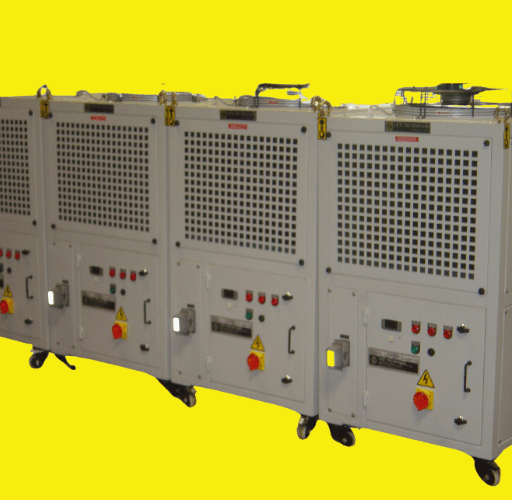
In industrial environments, heat is one of the most underestimated threats to equipment health. Many machines rely on oil not only to transmit power but also to lubricate and protect internal components. When oil temperature rises beyond the recommended range, viscosity changes, lubrication quality drops, and internal parts begin to wear faster. Over time, this leads to frequent breakdowns, higher spare part consumption, and costly equipment replacements. Oil chillers address this problem by maintaining a stable oil temperature and creating a controlled operating environment for industrial machinery. Oil chillers are not just cooling devices. They play a critical role in protecting machines, improving reliability, and controlling long-term operating costs.
The Hidden Cost of High Oil Temperature
When oil operates at elevated temperature, several problems occur inside the system:
- Oil viscosity decreases.
- Lubricating film becomes thinner.
- Oxidation and sludge formation increase.
- Seals and hoses harden and crack.
- Internal clearances change due to thermal expansion.
These conditions accelerate wear of pumps, valves, bearings, and actuators. While damage may not be visible immediately, the cumulative effect shortens the service life of critical components.
How Oil Chillers Protect Industrial Equipment
Oil chillers remove excess heat from circulating oil and maintain a stable temperature range. This brings multiple protective advantages.
Maintains Proper Oil Viscosity
Stable temperature keeps oil within its ideal viscosity range. This ensures a continuous lubricating film between moving parts and reduces metal-to-metal contact.
Reduces Mechanical Stress
Consistent temperature prevents repeated expansion and contraction of components. This improves dimensional stability and lowers fatigue stress.
Slows Oil Degradation
Lower operating temperature slows oxidation. Oil remains cleaner for longer periods, and oil change intervals can be extended.
Extends Seal and Hose Life
Controlled temperature prevents premature hardening of elastomers. This reduces internal leakage and pressure loss.
Direct Impact on Equipment Life
By controlling oil temperature, oil chillers help protect major machine assemblies such as:
- Hydraulic pumps and motors.
- Control valves and manifolds.
- Spindles and bearing assemblies.
- Hydraulic power packs.
Machines operate under stable conditions and approach their intended design life. This delays major overhauls and capital replacement.
Lower Replacement Cost Through Predictable Maintenance
Without proper oil cooling, maintenance becomes reactive. Components fail unexpectedly and must be replaced urgently. This increases the part cost and labor expense.
With oil chillers in place:
- Wear becomes gradual and predictable.
- Preventive maintenance schedules are easier to follow.
- Spare part consumption reduces.
- Emergency breakdowns decrease.
This lowers total replacement cost across the plant.
Reduced Downtime and Higher Equipment Availability
Unplanned downtime often costs more than the component itself. Lost production and delayed deliveries affect overall profitability. Oil chillers help keep machines operating within safe thermal limits. Fewer failures mean higher uptime and better utilization of installed equipment.
Applications Where Oil Chillers Deliver Strong Value
Oil chillers are widely used in:
- CNC machining centers.
- High-speed presses.
- Special-purpose machines.
- Injection moulding machines.
- Hydraulic power packs.
- Automation and robotic systems.
Any application with continuous operation and high heat generation benefits from a stable oil temperature.
Final Thoughts
Oil temperature control plays a key role in protecting industrial equipment and controlling long-term operating costs. Oil chillers help extend component life, reduce replacement frequency and support stable production.
Contact kavya@lextechnoaid.com or call +91 99166 98105 to discuss your oil cooling requirement and identify the right Hydraulic Oil Chiller for your application.