
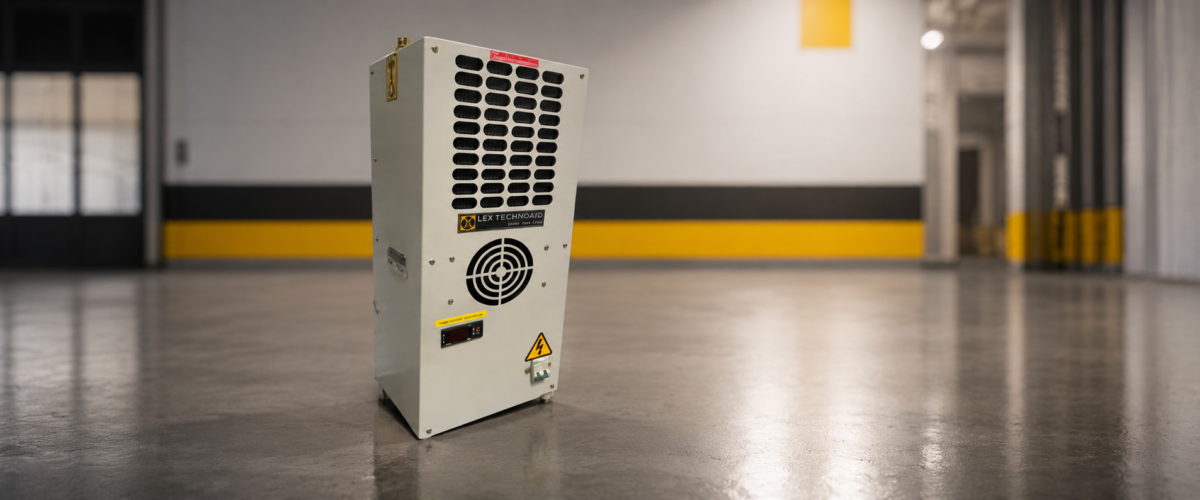
How to Choose Electrical Panel Air Conditioners for Industrial Applications
Electrical and electronic components generate heat during operation. Inside an enclosed panel, heat from PCBs, heat sinks, drivers, transformers, and other components can increase the internal temperature and place stress on sensitive equipment. Electrical Panel Air Conditioners help maintain the required panel temperature while controlling heat, humidity, and dust. Selecting the right system requires an evaluation of the internal heat load, factory environment, and operating conditions.
1. Identify the Sources of Heat
Begin by identifying the components that generate heat inside the panel. These may include:
- PCBs and heat sinks.
- Drivers and controllers.
- Transformers.
- Power supplies.
- Variable-frequency drives.
- Other electrical and electronic components.
The combined heat generated by these components affects the required cooling capacity. Future additions to the panel should also be considered because they may increase the cooling requirement.
2. Determine the Required Panel Temperature
The required internal temperature depends on the equipment installed inside the enclosure. The selected Electric Panel Air Conditioner should maintain a suitable operating temperature without exposing sensitive components to excessive heat.
Buyers should review:
- Recommended operating temperature of the components.
- Maximum expected internal temperature.
- Temperature outside the enclosure.
- Duration of machine operation.
- Variation in electrical load.
- Possibility of future panel expansion.
The cooling system should be selected according to actual operating conditions rather than only the external dimensions of the panel.
3. Consider the Factory Environment
Industrial environments can expose electrical panels to heat, dust, and humidity. These conditions should be assessed before selecting a cooling method. In dusty manufacturing areas, drawing untreated factory air directly into the enclosure can introduce contaminants. Humidity can also affect the operating environment inside the panel. Lex Technoaid’s Electrical Panel Air Conditioners regulate the internal temperature while supporting dust and humidity control. This helps create a cleaner and more stable environment for electrical components.
4. Evaluate the Industrial Application
Different industries have different panel-cooling requirements. Electrical Panel Air Conditioners can be used in:
- Automotive manufacturing plants.
- CNC and machine-tool facilities.
- Industrial automation and robotics.
- Power and electrical systems.
- Heavy engineering industries.
For CNC machines and automated production equipment, reliable control-panel operation is important for uninterrupted machine performance. The panel cooling system should be evaluated according to the process, operating hours, and surrounding conditions.
5. Calculate the Required Cooling Capacity
Cooling capacity should be based on the heat generated inside the panel and the heat entering from the surrounding environment. Selecting an undersized system may result in inadequate temperature control. An unnecessarily large unit may increase the initial investment and affect operating efficiency.
Capacity selection should consider:
- Internal heat generated by components.
- Panel dimensions.
- Required internal temperature.
- Maximum ambient temperature.
- Panel material and construction.
- Exposure to external heat sources.
- Frequency of door opening.
- Daily operating duration.
Accurate application data should be provided to the supplier before the system is selected.
6. Review Panel Sealing and Installation Conditions
The condition of the enclosure can influence cooling performance. Gaps, damaged seals, and frequent door opening can allow warm air, dust, and humidity to enter the panel.
Before installation, inspect:
- Panel-door seals.
- Cable-entry points.
- Available mounting space.
- Airflow around the cooling unit.
- Access for inspection and servicing.
- Nearby equipment or heat sources.
The installation should allow the air conditioner to reject heat without obstruction.
7. Compare Temperature and Humidity Control
Panel cooling is not only about reducing temperature. The system should also support a stable internal environment.
When comparing Electrical Panel Air Conditioners, ask how the proposed unit:
- Maintains the required panel temperature.
- Responds to changes in internal heat load.
- Supports humidity control.
- Helps limit dust entry.
- Protects components from heat stress.
- Supports continuous machine operation.
These factors help determine whether the system is suitable for the application.
Information to Share Before Requesting a Quote
Provide the following details:
- Panel dimensions.
- Components installed inside the panel.
- Estimated internal heat load.
- Required internal temperature.
- Maximum ambient temperature.
- Factory conditions, including dust and humidity.
- Machine operating hours.
- Available installation space.
Conclusion
Choosing Electrical Panel Air Conditioners requires an evaluation of internal heat generation, panel temperature, ambient conditions, enclosure sealing, and industrial application. Correct selection helps maintain a cleaner and more stable environment for electrical and electronic components. Lex Technoaid’s Electric Panel Air Conditioners are designed to control heat, humidity, and dust while maintaining the set temperature inside industrial electrical panels.
Contact marketing@lextechnoaid.com or call +91 99166 98105 to discuss your electrical panel cooling requirement.