
How to Size Magnetic Conveyors for Ferrous Chip-Handling Applications
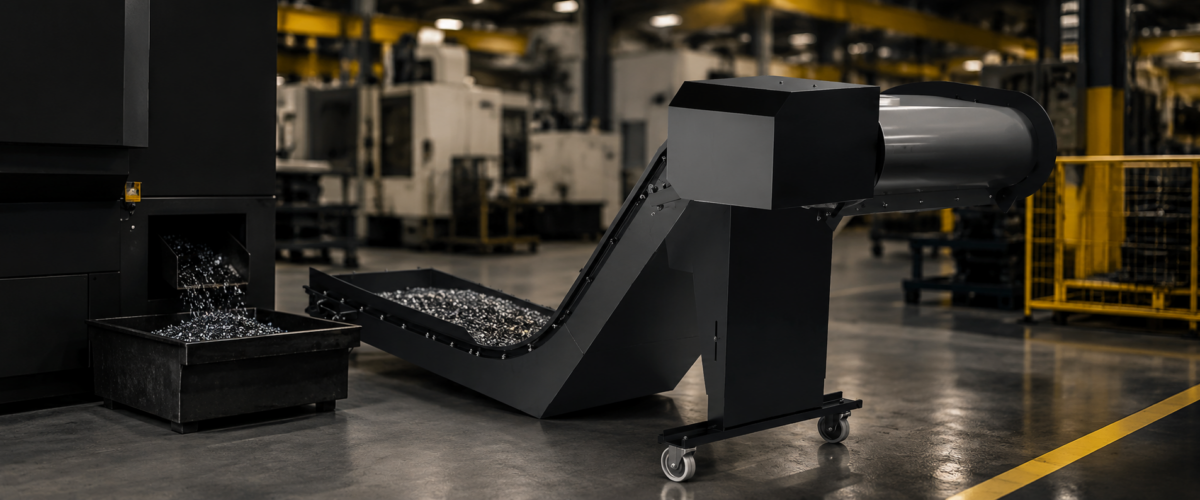
Magnetic Conveyors provide automated removal of ferrous chips generated during machining operations such as broaching, gear shaping, milling, grinding, and drilling. Correct sizing is important because chip shape, load, conveyor width, inclination, and magnet selection can all affect handling performance. A conveyor should therefore be selected using actual machining data rather than machine size alone.
1. Confirm That the Chips Are Ferrous
Magnetic Conveyors rely on magnetic force to move material. They are suitable for ferrous and magnetically responsive chips but are not intended for materials such as aluminium, brass, or other non-magnetic metals. Material grade should also be checked, as not all types of stainless steel respond to magnets in the same way. A representative chip sample can help confirm suitability before the conveyor is designed.
2. Identify the Chip Type
Chip shape affects how easily material can be collected and transported. Magnetic Chip Conveyors are generally suitable for:
- Short ferrous chips.
- Broken chips.
- Powdery chips.
- Grinding fines.
- Small magnetically responsive particles.
Long, curly, or bushy chips may entangle or accumulate differently and may require a different conveyor design. Sharing photographs or samples of the chips helps the manufacturer evaluate the application accurately.
3. Calculate the Expected Chip Load
The conveyor must handle the maximum expected quantity of chips generated during production. The assessment should consider:
- Number of machines connected.
- Machining operation.
- Workpiece material.
- Material-removal rate.
- Production cycle.
- Peak chip generation.
- Future production increases.
Average chip generation alone may not be sufficient because chips can arrive in batches during part unloading or machine cleaning. Lex Technoaid’s Magnetic Conveyors are available with capacities ranging from 50 to 200 kg/hour and can be customized according to the setup. The required capacity should be confirmed using actual or estimated peak operating conditions.
4. Select the Conveyor Width
The conveyor must be wide enough to receive chips from the machine without allowing material to accumulate around the loading area.
Width selection depends on:
- Chip volume and shape.
- Machine discharge opening.
- Required capacity.
- Available installation space.
- Method used to transfer chips onto the conveyor.
- Possibility of uneven chip distribution.
Lex Magnetic Conveyors are available with widths starting from 190 mm. The final width should match both the chip load and the machine interface.
5. Review the Required Inclination
Inclination determines how the conveyor fits within the available floor space and reaches the required discharge height. Higher inclinations can help reduce the installation footprint and allow more coolant or oil to drain before the chips are discharged. Lex Magnetic Conveyors can be configured at adjustable inclinations, including designs supporting angles up to 90°. The selected angle should be evaluated together with chip load, magnet strength, conveyor speed, and discharge arrangement.
6. Choose the Magnet Type
The magnetic force must be suitable for the chip material, size, load, and conveyor inclination. Lex Magnetic Conveyors can be equipped with:
- Rare-earth magnets.
- Ferrite magnets.
- A combination of rare-earth and ferrite magnets.
Magnet selection should be application-specific. A stronger magnetic arrangement is not automatically the best choice because the conveyor design must balance chip pickup, movement, and release at the discharge point.
7. Consider Wet and Dry Machining Conditions
Magnetic Conveyors can handle ferrous chips generated under wet or dry machining conditions. For wet machining, the design should account for coolant drainage and carry-out.
Important information includes:
- Type of coolant or oil.
- Quantity of fluid carried with the chips.
- Required drainage time.
- Return path for recovered fluid.
- Discharge height and collection-bin position.
These factors help determine the conveyor layout and inclination.
8. Measure the Available Machine Space
Before finalizing the conveyor, record:
- Available length, width, and height.
- Location of the machine chip outlet.
- Required discharge height.
- Position of the collection bin.
- Nearby doors and maintenance areas.
- Access required for inspection and servicing.
Accurate layout information helps prevent interference with the machine and surrounding equipment.
Information to Share with the Manufacturer
For correct sizing, provide:
- Chip photographs or samples.
- Workpiece material.
- Machining operation.
- Estimated peak chip load.
- Wet or dry operating condition.
- Available installation dimensions.
- Required conveyor inclination.
- Discharge height and collection arrangement.
Conclusion
Sizing Magnetic Conveyors requires an evaluation of chip material, chip shape, peak load, conveyor width, inclination, magnet type, and machine layout. Using actual application data helps identify a conveyor configuration suitable for reliable ferrous chip removal. Lex Technoaid offers customized Magnetic Chip Conveyors with capacities from 50 to 200 kg/hour, widths starting from 190 mm, and inclination options up to 90°.
Contact marketing@lextechnoaid.com or call +91 99166 98105 to discuss your ferrous chip-handling requirement.