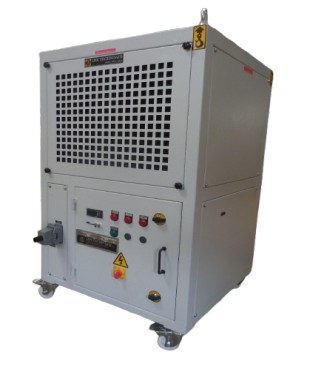
Industrial machines generate heat continuously through machining, spindle operation, hydraulic systems, motors, and coolant circulation. A properly selected chiller system helps remove this heat and maintain stable operating conditions. One important decision when planning industrial cooling is whether to use individual standalone chillers or a centralized chiller system serving multiple machines. Both configurations can be effective. The right choice depends on the number of machines, cooling requirements, plant layout, and future expansion plans.
A standalone chiller is an independent cooling unit connected to an individual machine or application.
For example, a standalone chiller may be used for:
- CNC machine coolant cooling.
- Grinding machine coolant cooling.
- Spindle cooling.
- Hydraulic oil cooling.
- Industrial water cooling.
- Laser or induction equipment cooling.
Standalone systems provide dedicated temperature control for the connected equipment.
This makes them particularly suitable when machines have different cooling requirements or are installed in separate areas of the plant.
A standalone chiller can be a practical choice when:
- Only one or a few machines require cooling.
- Different machines require different fluid temperatures.
- Machines are located far apart.
- Individual machines have significantly different heat loads.
- Future machine relocation is expected.
- Independent cooling is preferred for critical equipment.
Standalone systems also allow one machine to operate independently without depending on a common central cooling system.
A centralized chiller system uses one cooling arrangement to serve multiple machines or production equipment. Instead of installing a separate cooling system for every machine, cooling capacity is planned around the combined requirements of the connected equipment. Centralized chillers can be particularly useful in production lines where several CNC machines, grinding machines or other machine tools require controlled coolant or water temperatures.
When Should You Consider Centralized Cooling?
A centralized chiller may be suitable when:
- Several machines require similar cooling conditions.
- Machines operate within the same production area.
- A common coolant or cooling-water system already exists.
- Plant operators want to reduce the number of individual cooling units.
- Future machine additions are being planned.
- Centralized maintenance access is preferred.
However, centralized systems require proper engineering.
The combined heat load, fluid flow, piping distance, pressure requirements, and operating pattern of the connected machines must all be considered.
The choice should not be based only on the number of machines.
Standalone systems provide:
- Dedicated cooling for individual equipment.
- Flexible installation.
- Independent temperature settings.
- Easier machine relocation or expansion in stages.
Centralized systems provide:
- Cooling for multiple machines from a common system.
- Fewer individual cooling units on the shop floor.
- Centralized temperature management.
- Potential for simpler plant-wide cooling management.
The actual benefits depend on how the system is designed and how machines operate throughout the production cycle.
Factors to Evaluate Before Choosing
Before selecting either configuration, manufacturers should evaluate:
Cooling medium: Water, machining coolant, or hydraulic oil.
Heat load: Total heat generated during actual production.
Required temperature: Different processes may require different levels of temperature control.
Flow rate: The chiller and circulation system must support the required fluid flow.
Machine layout: Long piping runs can affect system design.
Operating pattern: Machines running simultaneously may create a different cooling requirement compared with machines operating intermittently.
Future expansion: Additional machines can significantly change the required cooling capacity.
Which Chiller System Is Right for Your Plant?
There is no single configuration suitable for every manufacturing facility. A standalone chiller may be better for a machine-specific application, while a centralized chiller can be considered where several machines share similar cooling requirements. The correct decision should be based on application data rather than simply selecting the largest available cooling capacity.
Industrial Chiller Systems from Lex Technoaid
Lex Technoaid designs industrial cooling solutions for individual machines as well as multi-machine applications. The range includes Hydraulic Oil Chillers, Coolant Chillers and Water Chillers, with configurations selected according to the cooling medium, heat load, machine arrangement and process requirement. Chillers are available in capacities ranging from 0.3 to 100 tons depending on the chiller type.
Planning a standalone or centralized cooling system for your machines?
Contact marketing@lextechnoaid.com or call +91 99166 98105 to discuss your application with Lex Technoaid.